


























Flood Barriers for Homes: Comparing Water-Filled, Inflatable, and Panel Systems
Table of Contents
- What to Look for in a Home Flood Barrier
- Water-Filled Flood Barriers
- Inflatable Flood Barriers
- Interlocking Panel Barriers
- Comparison Table by Barrier Type
- Temporary vs. Permanent Flood Barriers for Homes
- Planning a Perimeter: Measuring, Corners, and Driveways
- Choosing the Right Flood Barrier for Your Home
- FAQs
When floodwater threatens a property, the goal is simple: keep water away from the walls, doors, and foundation. Water barriers for houses do this by creating a temporary wall around the house, a section of yard, or a single opening. The right barrier depends on how high the water could rise, how much ground you need to cover, and how quickly you need to set it up.
This guide compares the three main types of residential flood barriers: water-filled, inflatable, and interlocking panel systems. It covers what to look for, how each type works, and how to plan a perimeter around your home. Along the way, we point to example products for each type, all available through EmergencyKits.com.
What to Look for in a Home Flood Barrier
Before comparing barrier types, it helps to know which features matter most for your property.
Protection height. Choose a barrier taller than the highest water level you expect. Local flood maps, past flood history, and your community's emergency management office can help you estimate this.
Length. Measure the full distance you need to protect, whether that is a single doorway, a garage, or the entire perimeter of the house. Some barriers connect end to end for longer runs.
Setup time. Flood warnings can come with little notice. Consider how long the barrier takes to deploy, how many people it needs, and whether it requires water, air, or tools.
Storage. Barriers need to be stored between floods. Look at how compact each system is when empty, folded, or disassembled, and where it will fit on your property.
Reusability. Many modern barriers can be emptied, cleaned, and stored for the next flood season. A reusable flood barrier for homes and businesses can offer better long-term value than single-use materials.
Water-Filled Flood Barriers
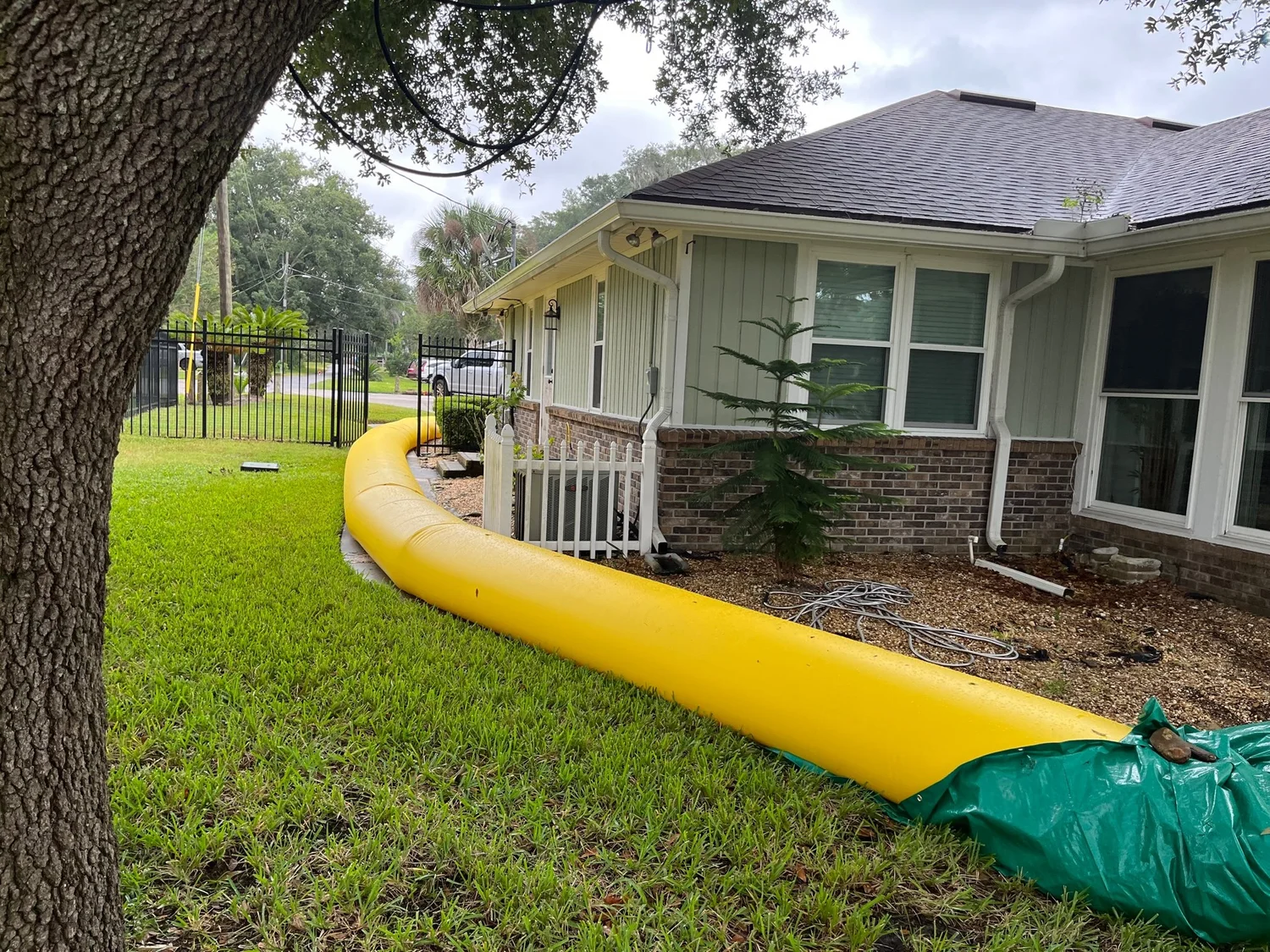
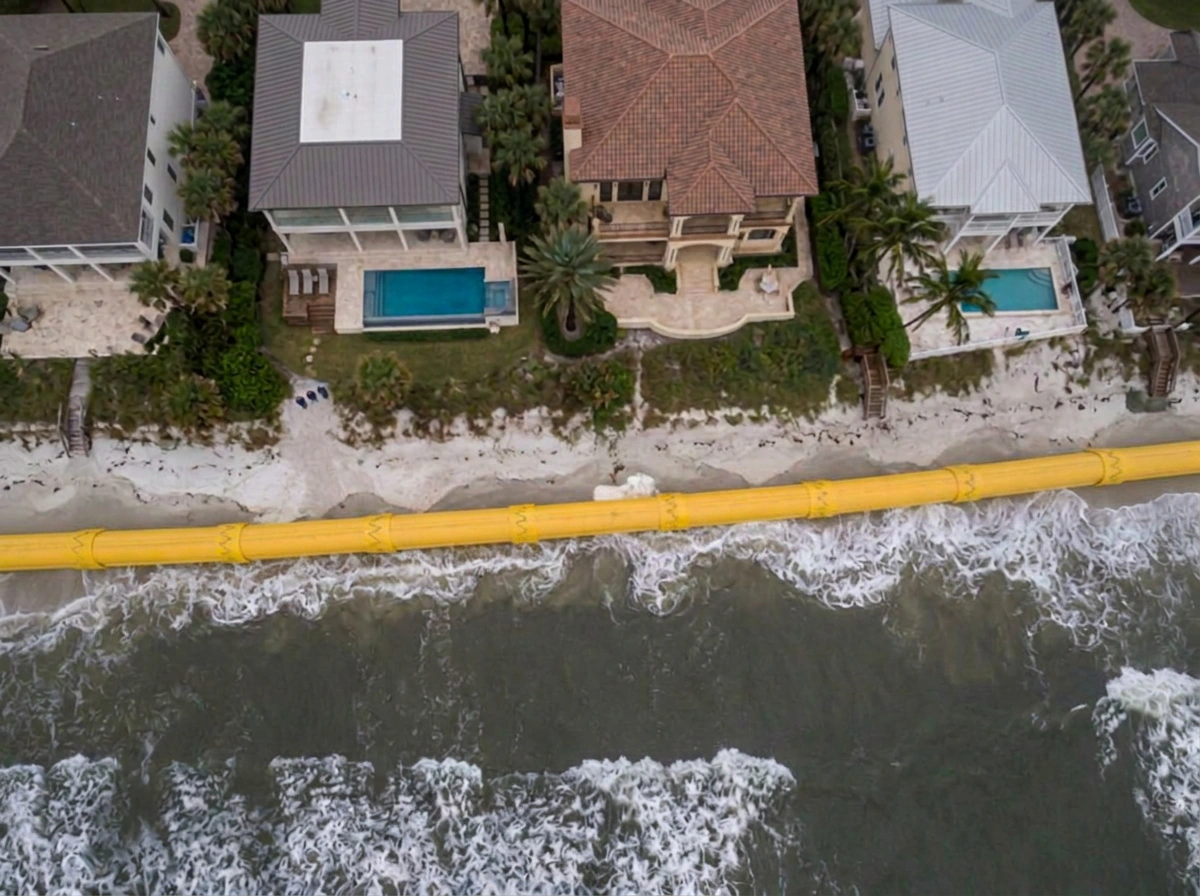
Water-filled barriers are long tubes made of durable material that are laid out empty and then filled with water on site. The weight of the water holds the barrier in place and creates a seal against the ground. When the flood passes, the tubes are drained, cleaned, and rolled up for storage.
Because they use water as ballast, these barriers are light and compact when empty. They work well on flat, open ground such as lawns, driveways, and garage thresholds.
Guppy
Guppy water-filled tubes, available through EmergencyKits.com, are one example of this type. Guppy comes in 6-, 12-, and 24-inch heights and in lengths from 10 to 100 feet, so you can match the barrier to both the expected water level and the distance you need to cover. A seaming strip connects tubes end to end to create a longer, continuous barrier. Tubes fill with a standard garden hose and are reusable from one flood season to the next.
Guppy MAX
For larger properties or deeper water, Guppy MAX offers 40 inches of protection in a 30-foot length. It fills with a fire hose rather than a garden hose, which suits estates, farms, and other large residential or industrial sites where higher flow is available.
Shop Heavy-Duty Water-Filled Flood Barriers
Inflatable Flood Barriers
Inflatable barriers use air instead of water to reach full size. They are laid out where needed and inflated with a pump, then deflated and folded for storage after the flood. Because they don't need a water source, they can be set up anywhere a pump can reach, and they are among the lightest systems to move and store.
Inflatable barriers come in two broad forms: long tubes for perimeter protection and fitted barriers for individual openings.
Serpent
The Serpent inflatable flood tube, available through EmergencyKits.com, is an example of a perimeter-style inflatable barrier. Its air-filled tubes come in 15- and 30-foot lengths and provide up to 40 inches of protection. Tubes can be positioned around a home or along a property line to redirect rising water.

Shop Inflatable Flood Barrier Tubes
Mako for Doorways and Garages
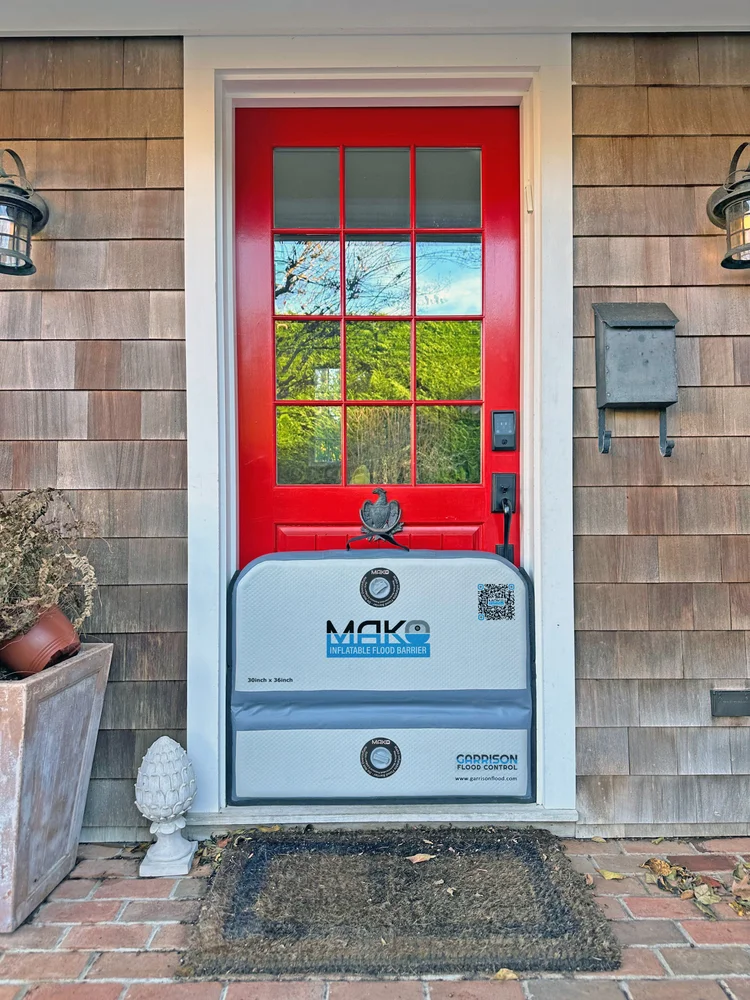
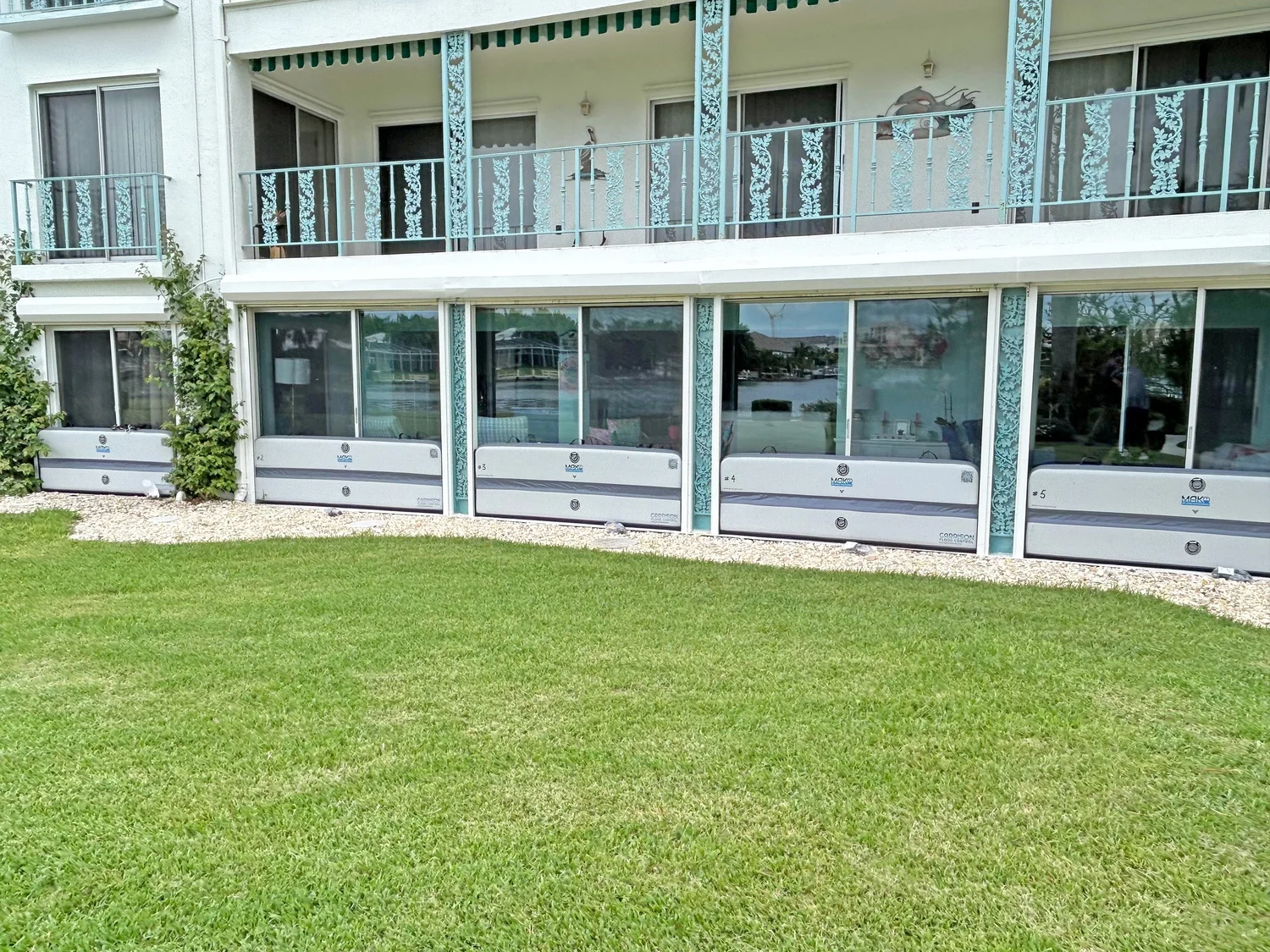
When the goal is to protect a single opening rather than an entire perimeter, a fitted inflatable barrier is often the better choice. Mako inflatable flood barriers, sold at EmergencyKits.com, come in standard widths from 24 to 108 inches, with 30- and 40-inch heights and custom orders for nonstandard openings. They press against the door frame to seal the opening without drilling. Learn more in "Door and Garage Flood Barriers: How to Choose the Right Protection for Every Opening."
Shop Inflatable Door Flood Barriers
Interlocking Panel Barriers
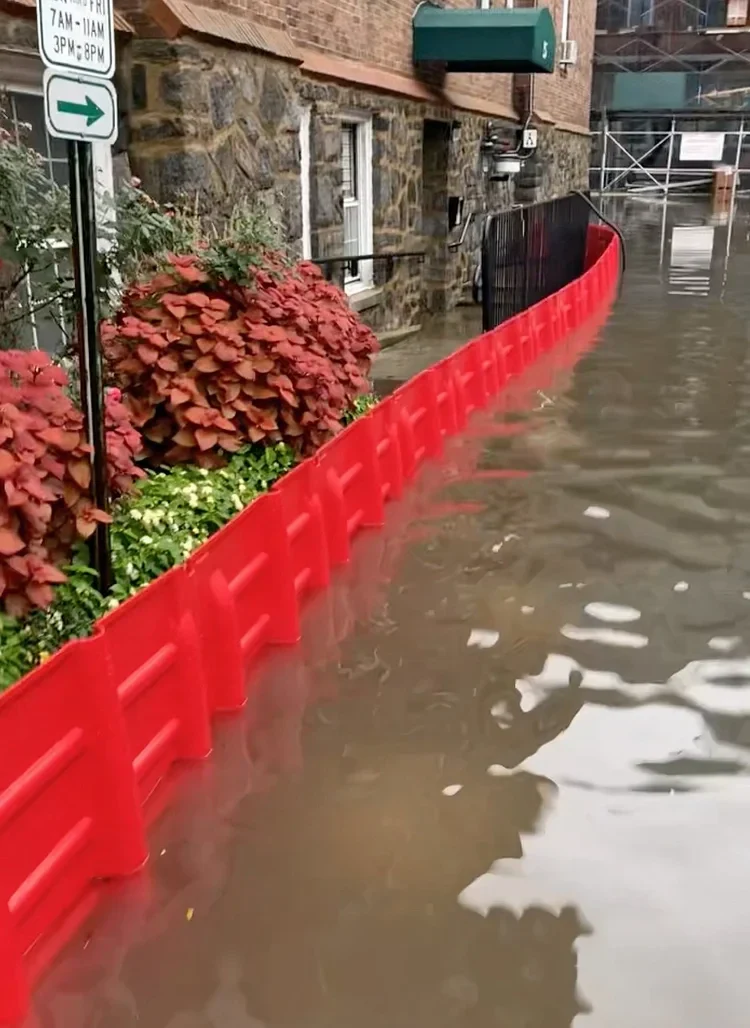
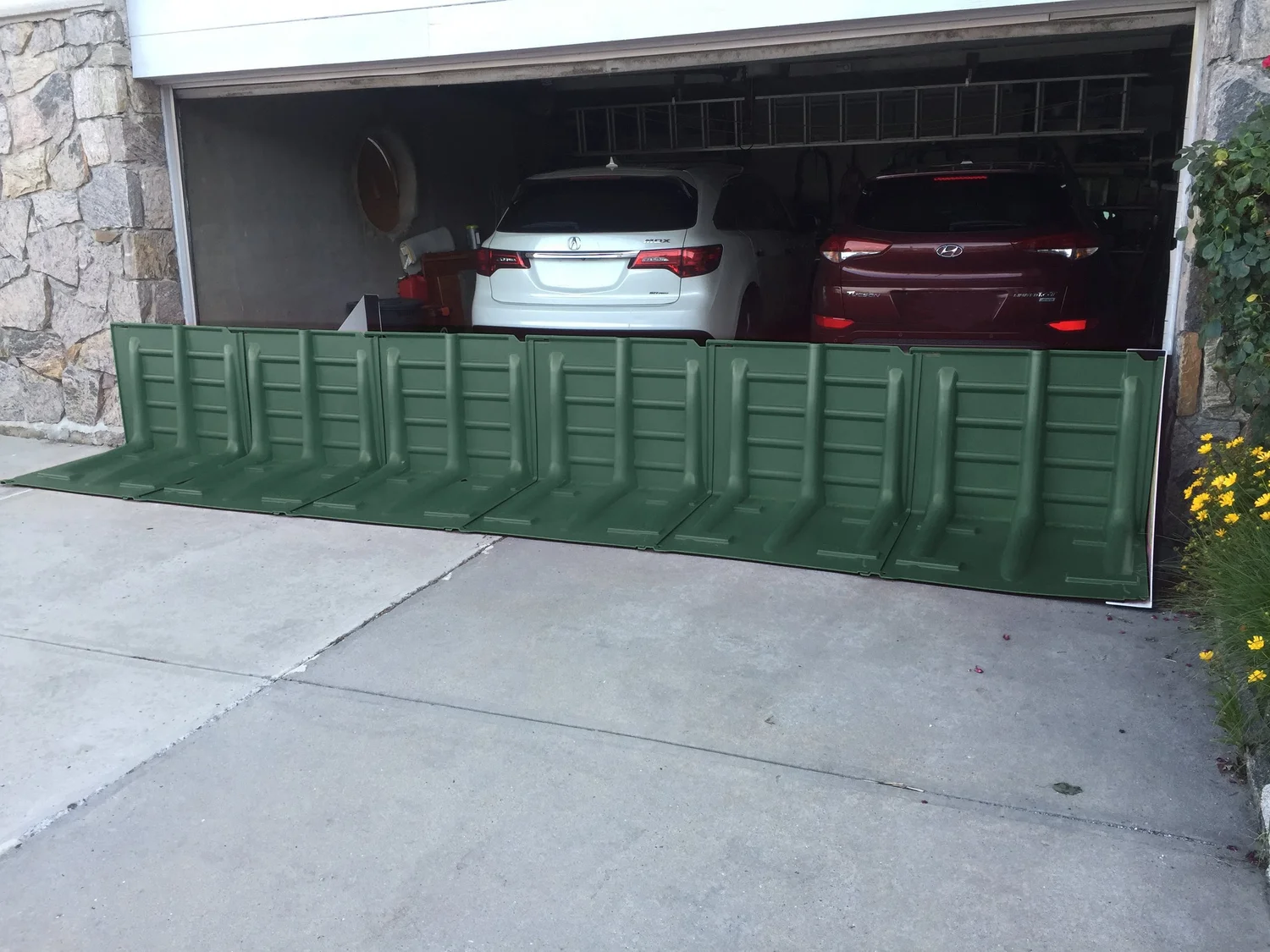
Panel barriers are made of rigid modular sections that lock together to form a continuous flood wall. Because the panels connect at set angles, they can follow the shape of a house, wrap around corners, and close off a full perimeter. When the flood passes, the panels are disconnected, cleaned, and stacked for storage.
Panel systems need no water or air to deploy, so setup depends only on how quickly the sections can be carried and connected.
Mayim
The Mayim modular flood barrier, available through EmergencyKits.com, is one example of this type. Mayim panels come in 20- and 30-inch heights, and curved panels let the barrier turn corners and form a complete loop around a home or outbuilding.
Shop Modular Flood Barrier Panels
Mayim MAX
For properties that need taller protection, Mayim MAX uses 40-inch panels. It follows the same interlocking design as Mayim, so it can be planned around corners and full perimeters in the same way.

Comparison Table by Barrier Type
| Water-filled | Inflatable | Interlocking panel | |
|---|---|---|---|
| How it deploys | Laid out empty, then filled with water | Laid out or fitted, then inflated with a pump | Panels carried into place and locked together |
| What setup needs | A water source (garden hose or fire hose) | A manual or electric pump | No water or air |
| Best for | Flat, open ground, driveways, and garage thresholds | Perimeters (tubes) or single openings (fitted barriers) | Full perimeters, corners, and building outlines |
| Storage | Drained and rolled | Deflated and folded | Disconnected and stacked |
| Reusable | Yes | Yes | Yes |
| Example at EmergencyKits.com | Guppy, Guppy MAX | Serpent, Mako | Mayim, Mayim MAX |
Each type can protect a home well. The best choice comes down to the shape of your property, the height of protection you need, and what resources you'll have on hand when a flood is forecast.
Temporary vs. Permanent Flood Barriers for Homes
Flood barriers for homes fall into two broad groups.
Permanent barriers are built into the property. Examples include floodwalls, raised berms, flood gates, and flood vents. They are always in place, but they usually require design work, permits, and construction, and they can change how a property looks and drains.
Temporary barriers are deployed when a flood is forecast and removed afterward. Water-filled, inflatable, and panel systems all fall into this group of portable flood barriers. They cost less up front than permanent construction, leave the property unchanged between floods, and can often be moved to a new home.
For most homeowners, temporary barriers are the practical starting point. They work well for properties that flood occasionally, for renters, and for homes where permanent construction isn't an option. Properties in high-risk flood zones may benefit from combining the two, with permanent measures handling routine water and temporary barriers adding protection during major events.
Planning a Perimeter: Measuring, Corners, and Driveways
A perimeter barrier is only as strong as its weakest point. Planning ahead makes setup faster and helps avoid gaps when a flood is on the way.
Measuring
- Walk the property. Identify where water is likely to come from and where it tends to collect.
- Mark the barrier line. Choose a path a few feet out from the house, on ground that is as level and firm as possible.
- Measure the full length. Use a measuring wheel or long tape, and add extra length for overlaps and connections.
- Note the height you need. Compare expected water levels with the protection heights available.
- Record everything. Keep a simple sketch with measurements alongside your family emergency plan.
Corners
Corners are where many barriers lose their seal. Panel systems with curved sections, such as Mayim, are designed to turn corners as part of a continuous wall. Tube barriers can bend around gentle curves, but sharp corners may need overlapping sections. Check each product's guidance for how it handles turns.
Driveways
Driveways often slope toward a garage and can channel water directly to the house. Place the barrier across the driveway where the ground is most level, and make sure the ends tie into the rest of the perimeter. Water-filled tubes like Guppy are well suited to flat driveway surfaces.
Single Openings and Backup Protection
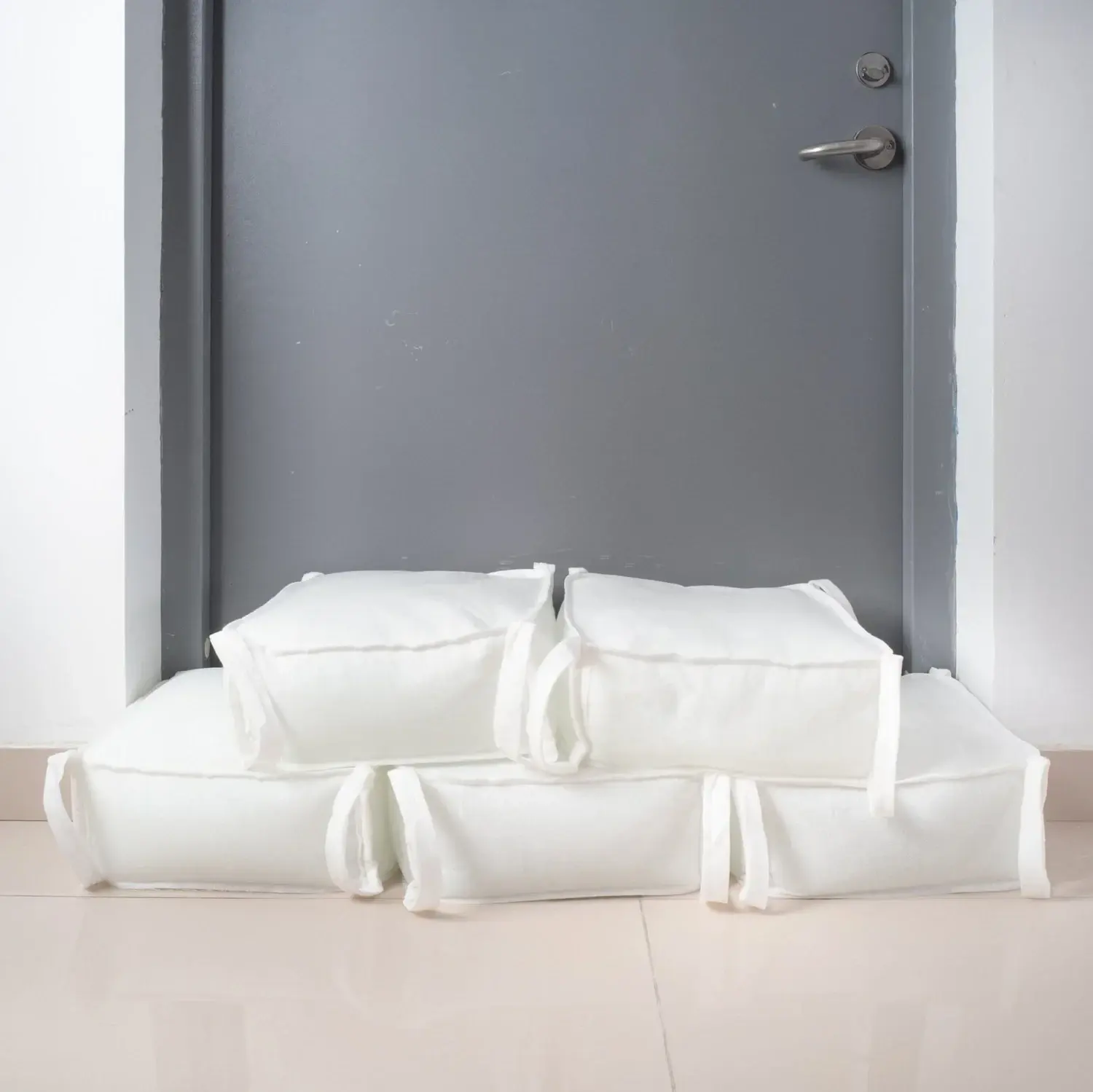
Even with a perimeter in place, doors and garages benefit from a second layer. Fitted barriers like Mako and water-activated bags like Minnow, both sold at EmergencyKits.com, can protect individual openings. See "Water-Activated Flood Barriers vs. Sandbags: Which Works Better for Your Home?"
Water Behind the Barrier
Rain, seepage, and rising groundwater can leave water pooled inside a perimeter. Pump products help remove it from corners and along the barrier line. Sea Sponge, available through EmergencyKits.com, is one example designed for water that collects behind a perimeter barrier.
Choosing the Right Flood Barrier for Your Home
Water-filled, inflatable, and interlocking panel barriers each offer reliable, reusable protection. Water-filled tubes suit flat, open ground. Inflatable barriers are light and quick to store, and they range from perimeter tubes to fitted door barriers. Panel systems handle corners and complete perimeters with a continuous wall.
Start by measuring your property and estimating the protection height you need. From there, our team can help you match a system to your home. EmergencyKits.com carries examples of every barrier type in this guide.
Shop All Flood Barrier Products
FAQs
How do flood barriers work?
Flood barriers create a watertight wall between floodwater and the area you want to protect. They hold their position through weight, pressure, or interlocking design, and they seal against the ground or a door frame so water can't flow underneath or around them. The barrier holds back or redirects water until the flood recedes.
How do temporary flood barriers work?
Temporary flood barriers are stored until a flood is forecast, then set up along a doorway, driveway, or property perimeter. Depending on the type, they are filled with water, inflated with air, or assembled from interlocking panels. Once the water recedes, they are emptied or taken apart, cleaned, and stored for the next use.
How much does a flood barrier cost?
Cost depends on the barrier type, the protection height, and the total length you need to cover. A fitted barrier for a single door costs far less than a system that surrounds an entire home. Taller barriers and longer runs increase the price, and larger systems are often quoted based on your property's measurements.