
















Emergency Radios & Comms

Custom Kits & Quotes

Emergency Radios & Communication Devices

About Emergency Radios & Communication Devices

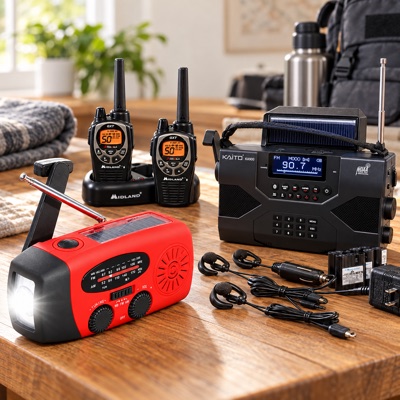
Communication is vital in all emergencies and disasters. Whether you have to do crowd control, need 24/7 access to geographically relevant weather information, or need to converse without a cellphone over short and long distances, EmergencyKits offers a wide range of radios, megaphones, and whistles so you can communicate in any situation. Learn more about the NOAA and the All Hazard Weather Service.

Frequently Asked Questions

Find answers to the most common questions about emergency radios and communications, from NOAA weather alerts, EAS, and SAME technology to reception, battery life, and performance when you need it most — because the warning that reaches you in time is the one that matters.

What is the difference between a basic emergency radio and a NOAA weather radio?

A basic emergency radio receives AM/FM broadcasts. A NOAA weather radio adds the seven NOAA weather channels plus Specific Area Message Encoding (SAME) alerts for your county. Our Kaito NOAA weather radios cover both functions in one device.

Will a hand crank radio actually get stations or just emergency broadcasts?

Yes, hand crank radios receive standard AM and FM broadcast stations as well as NOAA weather channels — not just emergency broadcasts. Modern Kaito models also include solar panels and USB charging as additional power options, keeping you connected regardless of conditions.

How often do emergency radio batteries need replacing?

Rechargeable internal batteries in most emergency radios last 3 to 5 years with normal use. Replace when charge-hold drops noticeably. Some models use standard AA or AAA batteries; rotate those annually in kits.

Do I need an external antenna for better reception?

Not typically for urban or suburban use. In rural areas, valleys, or steel-frame buildings, a telescoping or wire antenna can significantly improve reception. Most quality emergency radios include a telescoping antenna in the base unit.

Will an emergency radio work in my basement?

Yes, usually, but reception varies. AM reception is better than FM in basements because AM signals penetrate concrete better. NOAA weather signals are the hardest to receive indoors. Test your radio in your intended storage location before an emergency.

How loud are these radios for getting my attention at night?

Emergency radios with SAME alert capability emit a loud alert tone designed to wake most sleepers. Adjust the alert volume separately from the radio volume, and keep the radio near the bed for weather alerts during overnight severe weather.

Does the radio support Public Alert / SAME weather alerts?

Yes for NOAA-branded and Public Alert certified radios. SAME alerts trigger only for your specific county or parish, preventing alarm fatigue from events in distant areas. Programming SAME takes 5 minutes during initial setup.

What does EAS stand for?

EAS stands for Emergency Alert System. It is the national public warning network operated by FEMA, FCC, and NOAA that broadcasts emergency alerts over radio, TV, and cellular. An emergency weather radio with SAME capability receives EAS alerts directly.