















Door and Garage Flood Barriers: How to Choose the Right Protection for Every Opening
Table of Contents
- How Floodwater Gets in Through Doors and Garages
- Types of Door Flood Barriers
- Front Door and Double Door Flood Barriers
- Flood Barriers for Sliding Glass Doors
- Garage Door Flood Barriers
- How to Measure Your Door or Garage Opening
- DIY Door Flood Barriers vs. Purpose-Built Barriers
- Choose the Right Barrier for Every Opening
- FAQs
Doors and garage doors are the lowest, widest gaps in most homes, which makes them the first place floodwater finds its way inside. The right door flood barrier depends on the opening itself: a single front door, a pair of French doors, a sliding glass door, and a two-car garage each call for a different fit.
This guide explains how water gets in, the three main types of removable flood barriers, and which type works best for each kind of opening. You'll also find step-by-step measuring guidance and answers to common questions about cost and reusability. Along the way, we point to example products for each barrier type, all available at EmergencyKits.com.
How Floodwater Gets in Through Doors and Garages
Most exterior doors are built to keep out wind and rain, not standing water. Once water pools against a door, it moves through any gap it can reach. Common entry points include:
- The threshold. The seam between the door bottom and the sill is usually the first point of entry.
- Worn weatherstripping and door sweeps. These seals compress and crack over time, leaving small channels for water.
- Sliding door tracks. Tracks sit low and are designed to drain outward, so rising water can flow right back in.
- Garage door bottom seals. Rubber seals rarely sit perfectly flat on uneven concrete, and the gaps add up across a wide door.
- Door frames and side jambs. Once water rises above the threshold, it can seep around the edges of the frame.
Even a few inches of water can soak flooring, drywall, and anything in its path. A barrier that seals the full width of the opening, at a height above the expected water level, keeps that water outside.
Types of Door Flood Barriers
Removable door flood barriers fall into three main categories. Each one installs differently and suits a different kind of opening.
| Barrier type | How it works | Best for | Example at EmergencyKits.com |
|---|---|---|---|
| Inflatable pressure-fit barriers | Built to the opening, then inflated to seal against the frame | Front doors, double doors, sliding doors, garage doors | Mako |
| Water-activated flood bags | Bags absorb water and swell to form a barrier | Doorways and garage openings | Minnow |
| Water-filled tubes | Tubes filled with water sit across the threshold | Garage thresholds | Guppy |
Inflatable Pressure-Fit Barriers
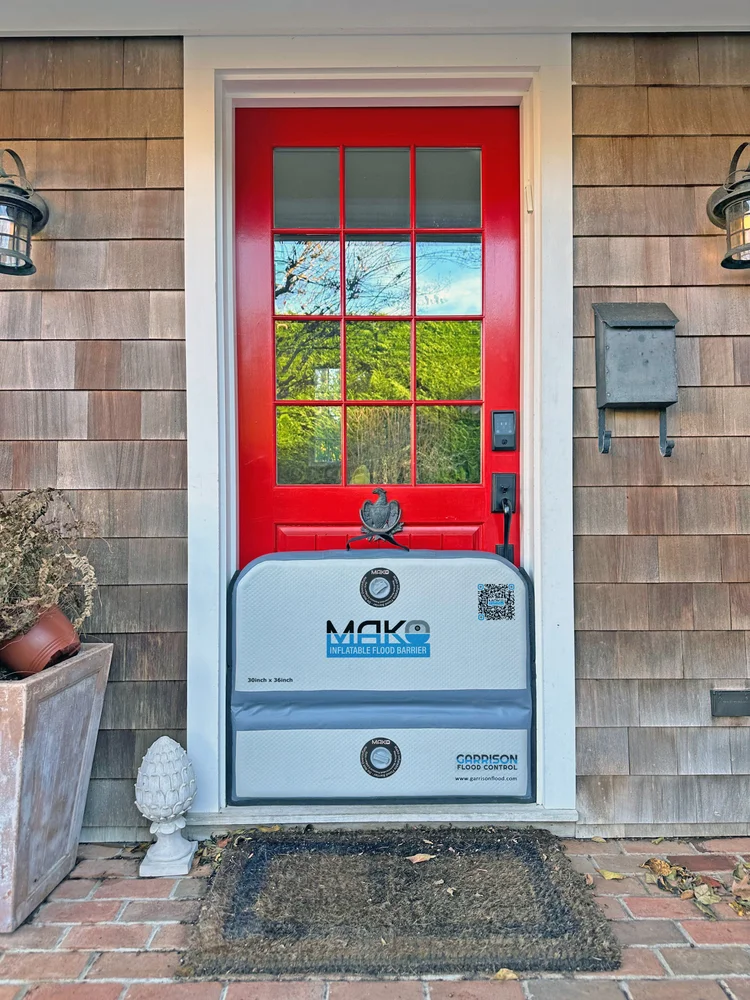
Inflatable pressure-fit barriers are sized to a specific opening. Once positioned, the barrier inflates and presses outward against the door frame to create a seal. Because the seal comes from pressure, these barriers typically need no drilling or permanent hardware, so the door and frame stay untouched.
This type is a good fit for homeowners who want precise, reusable protection. Barriers deflate for compact storage between uses, and a custom-sized unit leaves fewer gaps than a one-size-fits-all product.
One example is the Mako inflatable flood barrier, available at EmergencyKits.com. Mako barriers come in seven standard widths (from 24 inches up to 108 inches), with 30-inch and 40-inch standard heights. If none of the standard sizes fit your opening, custom orders are available. Mako inflates with a manual or electric pump.
Water-Activated Flood Bags
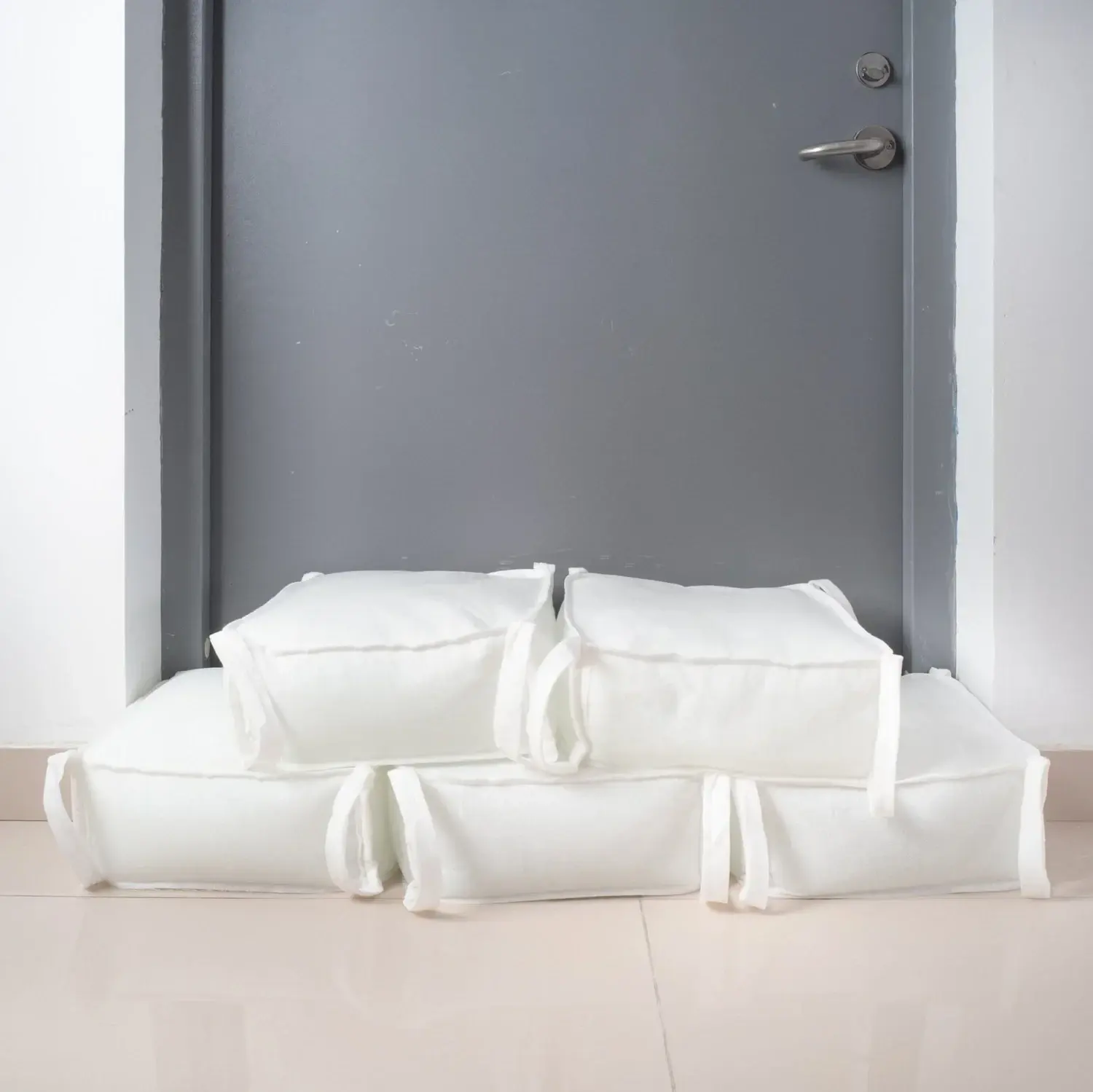
Water-activated flood bags are a lightweight alternative to sandbags. They stay flat in storage, then absorb water and expand when they come into contact with it. Lined up across a doorway or garage opening, they form a barrier without the weight or mess of filling traditional sandbags.
Flood bags work well for quick deployment, for renters, and for openings where a custom-fit barrier isn't needed. (For more information, read "Water-Activated Flood Barriers vs. Sandbags: Which Works Better for Your Home?")
EmergencyKits.com carries Minnow water-activated flood bags for doorways and garages. And once the danger of flooding subsides, cleanup is simple. After use, lay the bags out in the sun and the absorbed water will evaporate, leaving them ready to use again. When the bags reach the end of their life, they require no special disposal and can be thrown away with regular trash.
Water-Filled Tubes
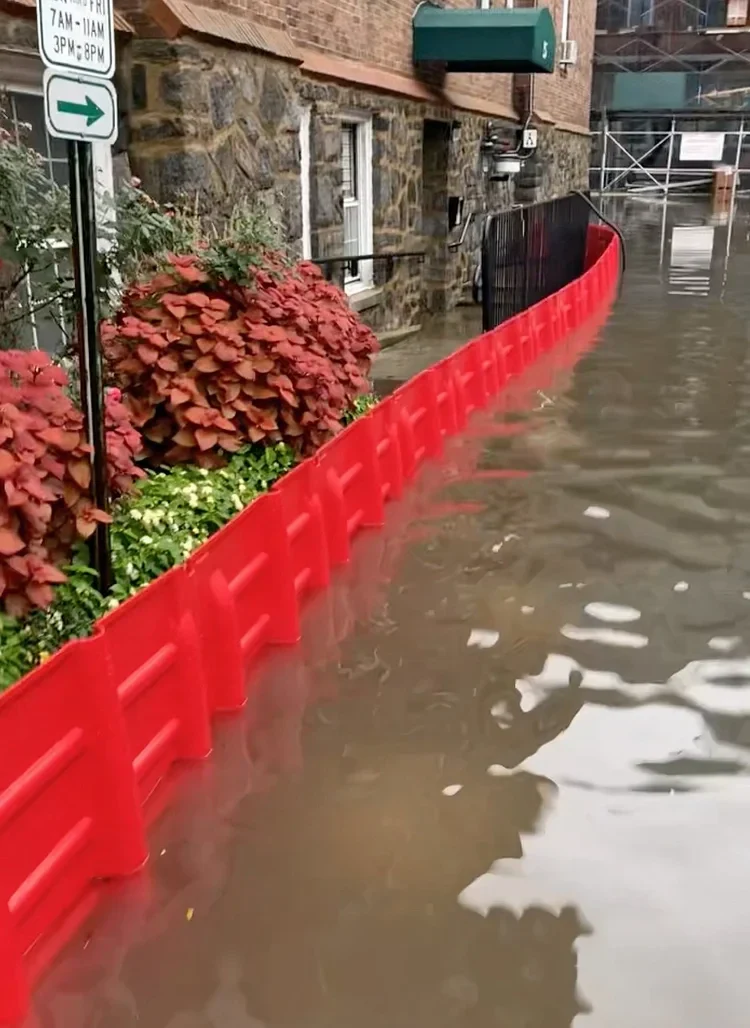
Water-filled tubes are designed for wide, flat thresholds like garage openings. They are filled with water on site, which gives them the weight to stay in place across the opening. When the water recedes, the tubes can be drained and stored.
An example is the Guppy water-filled flood tube available through EmergencyKits.com in 6-, 12-, and 24-inch heights and in 10-, 25-, 50-, and 100-foot lengths.
Front Door and Double Door Flood Barriers
A standard front door is the most straightforward opening to protect. The frame gives a pressure-fit barrier solid surfaces to seal against, and the width is small enough for one person to install the barrier quickly.
For a single front door, an inflatable pressure-fit barrier sized to the opening offers the most secure seal. It presses against both sides of the frame and the threshold without tools or drilling. Water-activated flood bags also work well here, especially as a fast, lightweight option or as a second layer behind another barrier.
Double doors, including French doors, need a little more planning:
- Measure the full opening. Size the barrier to the outer frame, not to each door individually.
- Account for the center seam. The gap where two doors meet is a weak point, so a single barrier spanning the whole opening is more reliable than two separate pieces.
- Check the threshold. Some double doors have a raised or uneven sill. Note this when you measure so the barrier fits flush.
A barrier built to span the full width of a double door in one piece removes the center seam as a point of entry. Mako inflatable barriers, sold at EmergencyKits.com, come in standard widths up to 108 inches, which covers most double doors in a single piece, and custom orders are available for larger or unusual openings.
Flood Barriers for Sliding Glass Doors
Sliding glass doors are one of the harder openings to seal. The track sits low, often at or near ground level, and it is designed to channel water. Patio doors also tend to face yards and decks where water collects during heavy rain.
A few points to keep in mind:
- Seal across the track. The barrier needs to sit tight against the track and threshold, not just the glass panels.
- Use the outer frame. Measure and seal against the fixed frame on each side, since the sliding panel itself can shift.
- Plan for wider openings. Many sliding doors run 72 inches or wider, which is closer to a small garage opening than a front door.
Inflatable pressure-fit barriers are a strong fit for sliding doors because they press against the fixed sides of the opening rather than relying on the door panels. Water-activated flood bags placed along the track can add a second line of protection. EmergencyKits.com carries both types, including Mako inflatable flood barriers in standard widths from 24 to 108 inches and Minnow water-activated flood bags.
Garage Door Flood Barriers
Garage doors are the widest openings in most homes. A single-car door is often 8 to 9 feet wide and a two-car door can reach 16 feet or more, so a garage door flood barrier has to hold a seal across a long, flat span.
Inflatable Barriers for Wide Openings
Inflatable barriers built to the full width of a garage opening avoid the seams that come with lining up several smaller pieces. On very wide openings, tie-down straps help anchor the barrier so it stays in position as water pushes against it, without drilling into the door or frame.
For example, Mako inflatable flood barriers from EmergencyKits.com come in standard widths up to 108 inches, with custom orders available for wider garage openings. Mako units over 72 inches wide include tie-down straps.
Garage Floor Water Barriers
A water barrier for garage floors sits directly on the concrete in front of or just inside the door. Water-filled tubes are a common choice here: their weight keeps them in place, and they redirect shallow water away from the garage. Guppy water-filled flood tubes, available through EmergencyKits.com in 6-, 12-, and 24-inch heights, are one example.
Flood Bags for Quick Coverage
Water-activated flood bags can be lined up across a garage opening for fast protection. They're also useful along interior garage doors that lead into the house. EmergencyKits.com carries Minnow water-activated flood bags sized for doorways and garages.
For protecting other areas of your home, see “Flood Barriers for Homes: Comparing Water-Filled, Inflatable, and Panel Systems.”
How to Measure Your Door or Garage Opening
Accurate measurements are the key to a good seal, especially for a custom-built barrier. Use a metal tape measure and follow these steps:
- Measure the width at the threshold. Measure from the inside edge of one side of the frame to the other, right at floor level.
- Measure the width again higher up. Take a second measurement about 30 to 40 inches up. Frames are not always perfectly square, so note both numbers.
- Choose your height. Pick a barrier height above the highest water level you expect. Inflatable barriers often come in standard heights, such as the 30-inch and 40-inch options for Mako.
- Check the floor surface. Note any raised sills, slopes, cracks, or uneven concrete, especially across a garage opening.
- Note obstructions. Record anything that sits in the opening, such as door stops, hinges, trim, or a sliding door track.
- Write it all down. Keep your measurements with your flood plan so you can reorder or replace a barrier easily.
For very wide garage openings, ask whether the barrier includes tie-down straps. Mako units over 72 inches wide, for example, come with them.
DIY Door Flood Barriers vs. Purpose-Built Barriers
Common DIY door flood barriers include sandbags, plastic sheeting, towels, and caulk or tape along the door frame. These can slow small amounts of water, but they have real limits:
- Sandbags are heavy and slow to fill. They take time and labor to place, and gaps between bags let water through.
- Plastic and tape rarely hold under pressure. Standing water pushes against the seal and finds the weakest point.
- Most DIY materials are single-use. Wet sandbags and towels usually have to be thrown away after a flood.
Purpose-built barriers are designed to seal a specific type of opening. Custom-fit inflatable barriers press evenly against the frame, install without tools, and can be reused season after season. Water-activated flood bags offer the familiar shape of a sandbag without the weight and filling. Water-filled tubes give garage thresholds a heavy, stable line of protection. EmergencyKits.com carries examples of all three: Mako, Minnow, and Guppy.
For homes in flood-prone areas, a purpose-built barrier that fits your opening is the more reliable long-term choice.
Choose the Right Barrier for Every Opening
Every door in your home has its own shape, width, and weak points. Matching the barrier to the opening gives you a better seal and more confidence when the forecast turns. Start by measuring each door and garage opening, then explore the flood barrier options available at EmergencyKits.com.
Shop Mako inflatable flood barriers
Shop Minnow water-activated flood bags
Shop Guppy water-filled flood tubes
FAQs
What is the best garage door flood barrier?
The best garage door flood barrier depends on how much water you expect and how wide the opening is. For full-width protection, an inflatable barrier sized to the opening provides a seamless seal; wide units should include tie-down straps. For shallow water at the threshold, water-filled tubes are a strong fit. EmergencyKits.com carries both, including Mako inflatable barriers and Guppy water-filled flood tubes.
How much does a door flood barrier cost?
Cost depends on the barrier type, the width of the opening, and the height you need. Water-activated flood bags are typically the lowest-cost entry point. Inflatable barriers generally cost more, with price rising for wider openings and taller barriers. Custom orders for nonstandard openings may cost more than standard sizes. Water-filled tubes for large thresholds are often priced by quote.
Can I use a flood barrier on a sliding glass door?
Yes. Sliding glass doors are often one of the most vulnerable openings in a home because the track sits low and is designed to drain water, so rising water can flow back in. A barrier for a sliding door should seal against the fixed frame on each side and across the track, not just against the glass panels, since the sliding panel can shift.
Fitted inflatable barriers are a strong option because they press against the frame without drilling. Mako inflatable flood barriers, sold at EmergencyKits.com, cover most sliding doors, with custom orders available for wider openings. Minnow water-activated flood bags placed along the track can add a second layer of protection.