Tornado Watch vs. Tornado Warning: What's the Difference (And Why It Matters)
When severe weather rolls in, the terms "tornado watch" and "tornado warning" get used constantly — but confusing the two can cost you the seconds you need to get safe. Here's what each one actually means, as well as a general description of how and where tornadoes form and exactly what to do when the sirens sound.
What Is a Tornado?
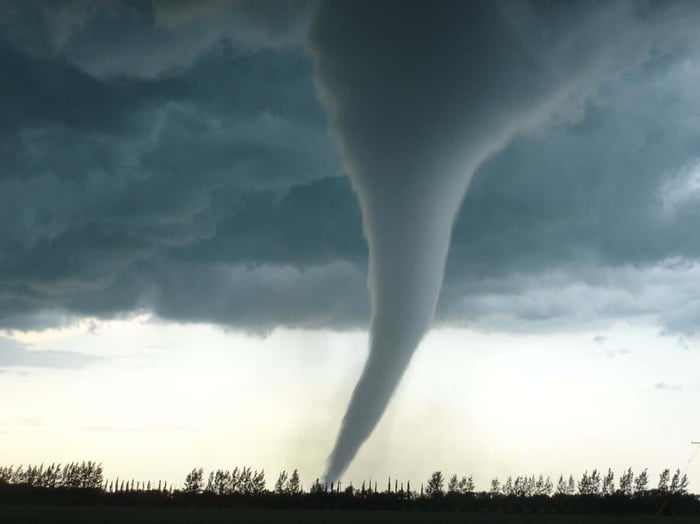
A tornado is a violently rotating column of air that extends from a thunderstorm down to the ground. Wind speeds inside a tornado can range from under 100 mph in weaker storms to over 300 mph in the most extreme cases, capable of leveling homes and tossing vehicles like toys.
Tornadoes form when warm, moist air near the ground collides with cool, dry air above it. This creates instability in the atmosphere. When wind shear — a change in wind speed or direction with height — is also present, it can cause the rising air to begin rotating. If that rotation tightens and drops from the storm cloud to the ground, a tornado is born.
Where Do Tornadoes Happen?
Tornadoes have been recorded on every continent except Antarctica, but the United States sees more tornadoes than anywhere else in the world — an average of over 1,200 per year. Much of that activity is concentrated in "Tornado Alley," a stretch of the central U.S. spanning parts of Texas, Oklahoma, Kansas, Nebraska, and South Dakota, where warm Gulf air and cool, dry continental air collide frequently. The Southeast, sometimes called "Dixie Alley," also experiences a significant number of tornadoes, often during the fall and winter months.
While tornado season generally peaks between March and June, tornadoes can — and do — occur at any time of year, in nearly any state.
Tornado Watch vs. Tornado Warning
It's worth noting that the National Weather Service does not issue "tornado advisories." A watch and a warning are the only two official tornado alert levels. The difference between a tornado watch and a tornado warning comes down to certainty and urgency.
What is a tornado watch? A tornado watch means conditions are favorable for tornado development in your area. Stay alert, monitor local weather updates, and be ready to act quickly if a warning is issued. Now is the time to review your shelter plan and make sure your emergency kit is within reach.
What is a tornado warning? A tornado warning means a tornado has been spotted or detected on radar in your area, and you need to take shelter immediately. Move to the lowest level of a sturdy building, away from windows, and protect your head. Do not wait to see the tornado, as every second counts.
Outdoor sirens usually mean a warning has been issued for your area, but they're designed to alert people outdoors, so don't rely on hearing one while you're inside; a weather radio or phone alert is a more dependable way to know a warning is in effect.
In rare, especially dangerous cases, the National Weather Service will issue a tornado emergency — a step beyond a standard warning, reserved for situations where a violent, confirmed tornado is bearing down on a populated area and severe damage or loss of life is likely. You may also see a watch or warning tagged "Particularly Dangerous Situation" (PDS), which signals that conditions are especially favorable for strong, long-track tornadoes. Both designations are the National Weather Service's way of saying the threat is more severe than usual, and they call for taking shelter without any hesitation.
In short: a watch means "be ready," and a warning means "act now."
Is a Tornado Watch or Warning Worse?
A tornado warning is worse than a tornado watch. A warning means a tornado is happening or imminent, while a watch means one is possible. That distinction is why a warning calls for immediate action, while a watch calls for readiness. Understanding which one you're under — and responding accordingly — is one of the most important parts of staying safe.
Signs a Tornado Is Coming
Warnings don't always come with much lead time, which is why it helps to recognize the warning signs your own senses can pick up on. A greenish tint to the sky often signals a severe thunderstorm with large amounts of moisture and hail, conditions that can also produce tornadoes. Large hail is another red flag, since it tends to accompany the same powerful updrafts that spawn tornadoes.
A loud, continuous roar — often compared to a freight train — can indicate a tornado is nearby, even if it's hidden by rain or darkness. Watch the sky for a rotating wall cloud, a low, dark cloud base that lowers from the storm and appears to spin, since this is frequently what a tornado forms from. A sudden, eerie calm after intense wind and rain can also precede a tornado, so treat stillness during a severe storm as a reason for caution rather than relief.
None of these signs replace an official watch or warning, but if you notice any of them, don't wait for a siren to take shelter.
What to Do During a Tornado Watch
A watch is your window to prepare, not to wait and see. Use this time to:
Identify a safe room on the lowest floor of your home, such as a basement, storm cellar, or interior bathroom.
Secure outdoor objects that could become projectiles in high winds.
Practice your family's shelter plan so everyone knows where to go.
Turn on a NOAA weather radio with SAME alerts so you're notified the moment a warning is issued.
Review your county's tornado watch and warning procedures.
Tornado safety starts with knowing exactly where everyone goes within 60 seconds of a warning. A tornado watch is the time to make sure that plan is solid.
What to Do During a Tornado Warning
Once a warning is issued, there's no time to deliberate — only to act.
Go immediately to your pre-planned safe room: a basement, storm cellar, or an interior room on the lowest floor, such as a bathroom, closet, or hallway, away from windows.
Cover yourself with a mattress or heavy blanket to protect against flying debris.
If you're in a mobile home, leave immediately for a sturdy building. Mobile homes offer little to no protection in a tornado.
If you're driving, do not try to outrun a tornado. Find sturdy shelter, or if none is available, lie flat in a low-lying area away from your vehicle.
When a tornado strikes, seconds matter. Moving quickly and calmly to the safest available space is the single most important thing you can do.
Where Is the Safest Place During a Tornado?
The safest place is a basement, storm cellar, or an interior room on the lowest floor of a sturdy building — think bathroom, closet, or hallway — away from windows and exterior walls. If you live in a mobile home, plan now for where you'll go instead, since mobile homes should always be evacuated ahead of a tornado.
Building Your Tornado Emergency Preparedness Plan
Tornado readiness isn't just about knowing what to do in the moment; it's about the groundwork you lay beforehand. That means having a stocked emergency kit, a family communication plan, and a designated safe room everyone already knows how to get to. The more automatic your response, the less time you lose when a warning is issued.
Severe weather doesn't wait for you to figure out a plan. Make sure yours is ready before the sky turns green. For more guidance, visit our Tornado FAQs page for answers to common tornado-related questions.