Earthquake Preparedness: What Causes Them and How to Get Ready
Earthquakes are unlike most other natural disasters in one important way: they strike without warning. There's no forecast, no watch, no warning issued hours in advance — just the ground shaking, sometimes for a few seconds, sometimes for much longer. That unpredictability is exactly why preparation matters so much. Understanding how earthquakes happen, where they're most likely, and what to do before, during, and after an earthquake can make the difference in how safely you and your household come through one. This guide covers the earthquake safety tips that matter most, from before the ground starts shaking to the days that follow.
What Causes Earthquakes?
The Earth's outer layer is made up of large sections called tectonic plates, which fit together like an enormous, slow-moving puzzle covering the planet's surface. These plates are constantly in motion, though usually far too slowly to notice — often just a few centimeters a year. As plates grind past each other, pull apart, or push together along their edges, called fault lines, stress builds up in the rock. Earthquakes happen when that built-up stress is finally released, causing the rock to break and the ground to shake as energy radiates outward from the point of rupture.
The focus, or hypocenter, of an earthquake is the point underground where the rupture begins. The point on the surface directly above it is called the epicenter, and it's typically where shaking is most intense. Earthquakes can also be triggered by volcanic activity or, less commonly, human activities like mining or reservoir-induced seismicity, though the vast majority result from natural tectonic movement. The USGS tracks earthquakes as they happen and publishes real-time data at earthquake.usgs.gov, which is a useful resource for checking activity in your area.
How Are Earthquakes Measured?
Earthquakes are measured using two different types of scales, which answer two different questions.
Magnitude measures the amount of energy released at the earthquake's source, most commonly using the moment magnitude scale (which replaced the older Richter scale for most modern measurements, though the two are similar for smaller earthquakes). This scale is logarithmic, meaning each whole number increase represents roughly 32 times more energy released. To put that in perspective: a magnitude 2 earthquake is barely felt, magnitude 5 can cause noticeable damage, magnitude 7 is considered a major earthquake, and magnitude 8 or higher is catastrophic. A magnitude 7 earthquake, for example, releases dramatically more energy than a magnitude 6, not just "a little more."
Intensity, by contrast, measures the effects of an earthquake at a specific location, using a tool like the Modified Mercalli Intensity scale. Intensity can vary widely across a single earthquake's affected area; a magnitude 6 earthquake might cause severe damage near its epicenter while barely being felt a hundred miles away, so a single event can have one magnitude but many different intensity readings depending on where you are.
How Long Do Earthquakes Last?
Most earthquakes last only a few seconds to about a minute, with the majority of shaking wrapping up in under 30 seconds. Larger earthquakes can shake longer, but even a brief earthquake can cause significant damage if it's strong enough. Because the shaking itself is usually short, the safest response is to act immediately: drop, cover, and hold on as soon as you feel the ground move, rather than waiting to see how long it lasts or how severe it becomes.
Where Do Earthquakes Happen?
Earthquakes are most common along tectonic plate boundaries, and a large share of the world's seismic activity occurs around the Pacific Ring of Fire — a horseshoe-shaped zone stretching along the coasts of the Pacific Ocean through Japan, Indonesia, the Philippines, Alaska, and down the western coasts of North and South America.
In the United States, California and Alaska see the most frequent earthquake activity, largely due to their position along active fault systems like the San Andreas Fault. But earthquakes aren't limited to the West Coast. The New Madrid Seismic Zone, spanning parts of Missouri, Arkansas, Tennessee, Kentucky, and Illinois, has produced some of the most powerful earthquakes in U.S. history, and areas of the Northeast, the Pacific Northwest, and even parts of the Southeast carry meaningful seismic risk as well. Because fault lines don't always align neatly with state or regional boundaries, it's worth checking seismic hazard maps for your specific area rather than assuming risk based on geography alone.
What Kind of Damage Can Earthquakes Cause?
The damage from an earthquake depends heavily on magnitude, depth, distance from the epicenter, and local building standards, but common effects include:
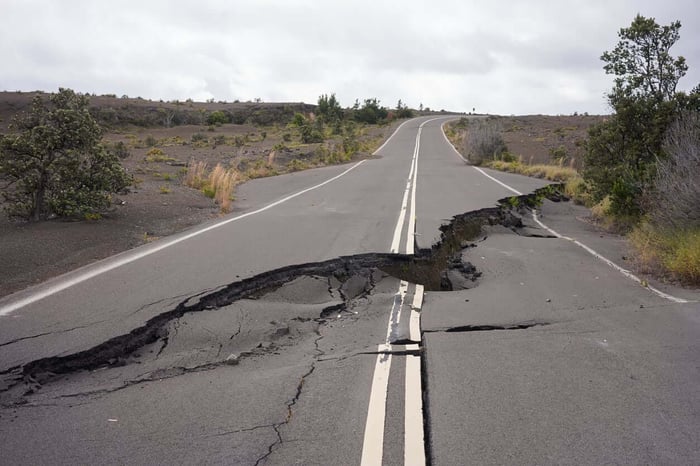
Structural damage, ranging from cracked walls and foundations to partial or total building collapse, particularly in older structures not built to modern seismic codes.
Falling hazards, including collapsing shelving, ceiling fixtures, and unsecured furniture — often a more immediate danger indoors than the building itself.
Landslides and soil liquefaction, where saturated soil temporarily behaves like a liquid during shaking, which can undermine building foundations even at a distance from the epicenter.
Broken gas, water, and power lines, which can lead to fires, flooding, or extended utility outages after the shaking stops.
Tsunamis, when a strong undersea earthquake displaces a large volume of water, posing a serious risk to coastal areas near the epicenter.
Aftershocks are also common in the hours, days, and even weeks following a major earthquake, and can sometimes cause additional damage to structures already weakened by the initial event.
What to Do During an Earthquake: Step by Step
How you respond in the moment depends partly on where you are when the shaking starts. If you're indoors, follow the standard guidance: Drop, Cover, and Hold On.
Drop to your hands and knees
Cover your head and neck (and entire body if possible) under a sturdy desk or table
Hold on until the shaking stops.
Stay away from windows, heavy furniture, fireplaces, hanging objects, and exterior walls, and do not run outside during shaking, since falling debris near exits is a major source of injury.
If you're outside when an earthquake strikes, move away from buildings, power lines, trees, and overpasses, then drop to the ground in an open area and cover your head and neck with your arms until the shaking stops. If you're driving, pull over and stop in a clear area, avoiding bridges, overpasses, and power lines.
Your best chance to survive an earthquake is knowing what to do before the ground starts moving.
Where Is the Safest Place During an Earthquake?
The safest place during an earthquake is under a sturdy a desk or table. This is a shift from the old advice to stand in a doorway, which modern guidance no longer recommends — doorways aren't structurally stronger than the rest of a room in most modern homes, and a swinging door can actually injure you during strong shaking. Getting low and under a table or desk keeps you protected from falling objects and shifting debris, which cause far more injuries than structural collapse in the vast majority of earthquakes.
If you are unable to locate a table or desk, get low near an interior wall or next to low-lying furniture that won't fall on you.
What to Do After an Earthquake
Once the shaking stops, stay inside until it's safe to exit. Aftershocks can occur for hours, days, or even months after the main event, so it's worth staying alert for at least 72 hours following a significant earthquake and avoiding any structure that looks visibly damaged. Evacuate only if your building shows clear structural damage or you smell gas; otherwise, check for injuries, inspect your utilities, and wait for guidance from local emergency services before resuming normal activity.
How to Prepare for an Earthquake
Because earthquakes strike without warning, preparation has to happen well before the ground starts shaking. FEMA and other emergency management agencies recommend a combination of home safety measures, supplies, and household planning.
Secure your space. Anchor heavy furniture, bookshelves, and water heaters to wall studs to prevent tipping. Secure cabinet doors with latches so contents don't fly open during shaking, and move heavy or breakable items to lower shelves. If you're able, consider a professional seismic retrofit for older homes, which can significantly reduce structural damage risk.
Know your household's role. Make sure everyone in your household is familiar with Drop, Cover, and Hold On (covered in detail above) so the right response is automatic rather than something to figure out in the moment.
Build a family emergency plan. Identify safe spots in each room of your home, establish an out-of-area contact everyone can reach if local lines are jammed, and make sure every household member knows the plan, including children and anyone with mobility considerations.
Stock an earthquake survival kit. Water, non-perishable food, flashlights, a first aid kit, and any necessary medications should be part of every household's baseline earthquake survival kit, but earthquake preparedness adds a few specific considerations. Since utility lines are often damaged, plan for extended outages of water, gas, and electricity. Keep sturdy shoes near your bed in case of broken glass, and consider a whistle to signal for help if you become trapped.
Learn how to shut off utilities. Knowing how to shut off your gas, water, and electricity — and keeping any needed tools nearby — can help prevent fires or flooding if lines are damaged during shaking.
Practice regularly. Earthquake drills, like the annual Great ShakeOut events held in many states, help make the right response automatic rather than something you have to think through in the moment. To run your own drill at home, pick a moment when your household isn't expecting it and call out "drop, cover, and hold on" as the cue to react. Have everyone get to the floor under a table or desk, cover their head and neck, and hold that position for at least 60 seconds to mimic the duration of a real earthquake. Afterward, walk through what worked and what didn't — whether everyone found solid cover quickly, whether kids or elderly household members needed extra guidance, and whether your chosen spots actually make sense in each room of your home. Running this drill twice a year keeps the response sharp without it becoming routine background noise.
Do You Need Earthquake Insurance?
Standard homeowners and renters insurance policies typically do not cover earthquake damage, which surprises many people until they need to file a claim. In most cases, earthquake coverage has to be purchased separately, either as a standalone policy or as an endorsement added to an existing homeowners policy.
Whether earthquake insurance makes sense for you depends largely on where you live and what you'd stand to lose. Homeowners in high-risk seismic zones, like much of California, often find the cost of coverage worthwhile given the potential cost of structural repairs, which can run into the tens or hundreds of thousands of dollars. In lower-risk areas, some homeowners choose to accept the risk and self-insure through savings instead, though it's worth reviewing your region's seismic hazard level before making that call. If you're considering coverage, look closely at the policy's deductible, since earthquake policies often carry a percentage-based deductible (commonly 10-15% of your home's insured value) rather than a flat dollar amount, which can mean a larger out-of-pocket cost than homeowners expect.
Building Earthquake Readiness Into Everyday Life
Unlike hurricanes or tornadoes, earthquakes don't give you a countdown. That's exactly why the preparation described here has to happen ahead of time, as part of your household's normal routine rather than something you scramble to figure out once the shaking starts. Securing your home, stocking the right supplies, and making sure everyone in your household knows what to do can turn a frightening, unpredictable event into one you're genuinely ready to face.
For more guidance, visit our Earthquake FAQs page for answers to common earthquake-related questions.