











Fire Extinguishers

Custom Kits & Quotes

ABC & BC Rated Fire Extinguishers

About ABC & BC Rated Fire Extinguishers

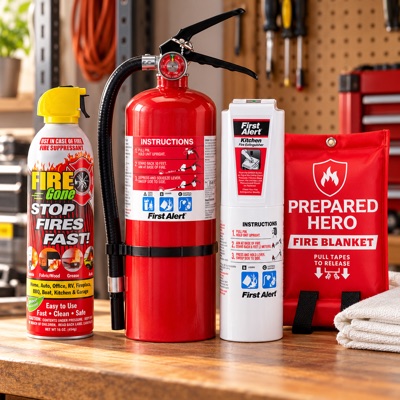
ABC & BC Rated Fire Extinguishers provide essential protection against common fire hazards, helping you respond quickly and safely in emergency situations. ABC-rated extinguishers are effective on ordinary combustibles, flammable liquids, and electrical fires, while BC-rated models target flammable liquids and electrical fires. Ideal for homes, workplaces, schools, and emergency preparedness kits, these fire extinguishers are designed for reliability and ease of use when every second counts. Compact, durable, and ready to deploy, they offer a critical line of defense to help protect people, property, and peace of mind during fire emergencies.

Frequently Asked Questions

Find answers to the most common questions about fire extinguishers, from understanding extinguisher types and where to use them to maintenance schedules and making sure everyone in your home can operate one — because a fire extinguisher only works if it's the right one, in the right place, and ready to go.

What is the difference between ABC and BC fire extinguishers?

ABC extinguishers (multi-purpose dry chemical) handle Class A (ordinary combustibles), Class B (flammable liquids), and Class C (electrical) fires, making them the standard home and office choice. BC extinguishers handle flammable liquids and electrical only; they do not work on paper, wood, or fabric fires.

How do I know if my fire extinguisher has expired?

Check the gauge monthly — the needle should be in the green zone. Disposable extinguishers typically last 8 to 12 years; rechargeable models can last longer with regular hydrostatic testing. Always follow the manufacturer's guidelines for your specific model. Replace your extinguisher if the shell is damaged, the gauge is in the red, or it has not been inspected within the recommended timeframe.

Can I use the same extinguisher for a kitchen fire and an electrical fire?

Yes for ABC-rated extinguishers. No for Class K (kitchen-specific wet chemical) extinguishers, which are designed for deep-fat fryer fires and should not be used on electrical fires.

How heavy is a fire extinguisher, and can an elderly person use one?

Fire extinguishers range from 2.5 lbs for compact home models to 10 lbs or more for commercial units. Smaller 2.5 lb models are easier to handle and maneuver, while larger 10 lb models can be heavy and awkward for untrained users. Choose the lightest size adequate for the fire risk in your home or workspace.

Do I need a different extinguisher for my garage vs kitchen?

No, one ABC-rated extinguisher works for both locations, but experts recommend one per area for fastest access. A Class K kitchen-specific extinguisher adds protection against deep-fryer fires in homes with heavy cooking.

What do I do after I use a fire extinguisher?

Ventilate the area, clean up the dry chemical residue (its' corrosive to metal), and replace or recharge the extinguisher immediately. Do not assume a partially used extinguisher is ready for the next fire.

How often should a fire extinguisher be recharged or serviced?

Fire extinguishers should be visually inspected monthly and professionally inspected once a year. Hydrostatic testing is required every 5 to 12 years depending on the type, and extinguishers should be recharged after any discharge, even partial. For workplaces, keeping inspection tags current is required for compliance.