






















How to Build a Family Emergency Plan
When an emergency hits, the households that respond calmly are usually the ones that already know exactly what to do. A family disaster plan turns a chaotic moment into a series of steps everyone already understands, which is why it's one of the most valuable things you can put together before disaster strikes, not after.
What Should a Family Emergency Plan Include?
At its core, a family emergency plan is a written document that lays out the essentials your household needs to stay safe and stay connected during a crisis. So what should a family emergency plan include? At a minimum, it should cover:
A list of household members, including ages and any relevant medical needs
Emergency contacts, both local and out-of-area
Medical information for each family member, including conditions, medications, and allergies
Two meeting places — one near home, one outside the neighborhood
Evacuation routes for your home and area
If you'd rather start from a pre-built format, download our free family emergency plan template. Whatever version you use, every household member should know the plan exists, understand their role in it, and review it at least once a year, since contact information, medical needs, and even meeting locations can change over time.
Build the Plan Together
A household emergency plan works best when it isn't just handed down from one person to the rest of the household. Making the plan together, building your emergency kit as a shared project, and assigning each person a specific role helps everyone feel invested in it, rather than treating it as a document that only one parent understands.
For children, this might mean assigning something simple, like being in charge of grabbing a favorite comfort item or reminding a younger sibling of the meeting spot. Giving kids ownership over even a small part of the home emergency plan makes them more likely to remember it when it actually matters.
Teaching Kids the Basics
Age-appropriate language and a bit of repetition go a long way with children. At minimum, kids should be able to recite their home address, a parent's phone number, and how to call 911. Basic safety habits, like Stop, Drop, and Roll for fires or Drop, Cover, and Hold On for earthquakes, are easiest to teach through practice rather than explanation alone — a quick game or drill tends to stick better than a lecture.
As mentioned above, giving each child a specific role in the family plan, sized to their age, helps turn the plan from something abstract into something they feel is theirs.
Building Your Family Communication Plan
Communication often becomes the hardest part of an emergency, especially if local phone networks are overloaded or family members are in different places when disaster strikes. An emergency communication plan solves this ahead of time.
Start by identifying an out-of-area contact — a family member or close friend who lives outside your region. Long-distance calls often go through even when local networks are jammed after a disaster, so this person becomes a central point everyone can reach to report their status and relay messages to other family members.
From there, write down each household member's mobile number, work or school phone number, relevant medical information, and your two meeting locations. Consider laminating a wallet card for each family member with this information, especially for kids who may not have a phone or may struggle to recall details under stress. Practice the full communication plan at least once a year, and update the card any time contact information changes.
Choosing Your Family Meeting Points
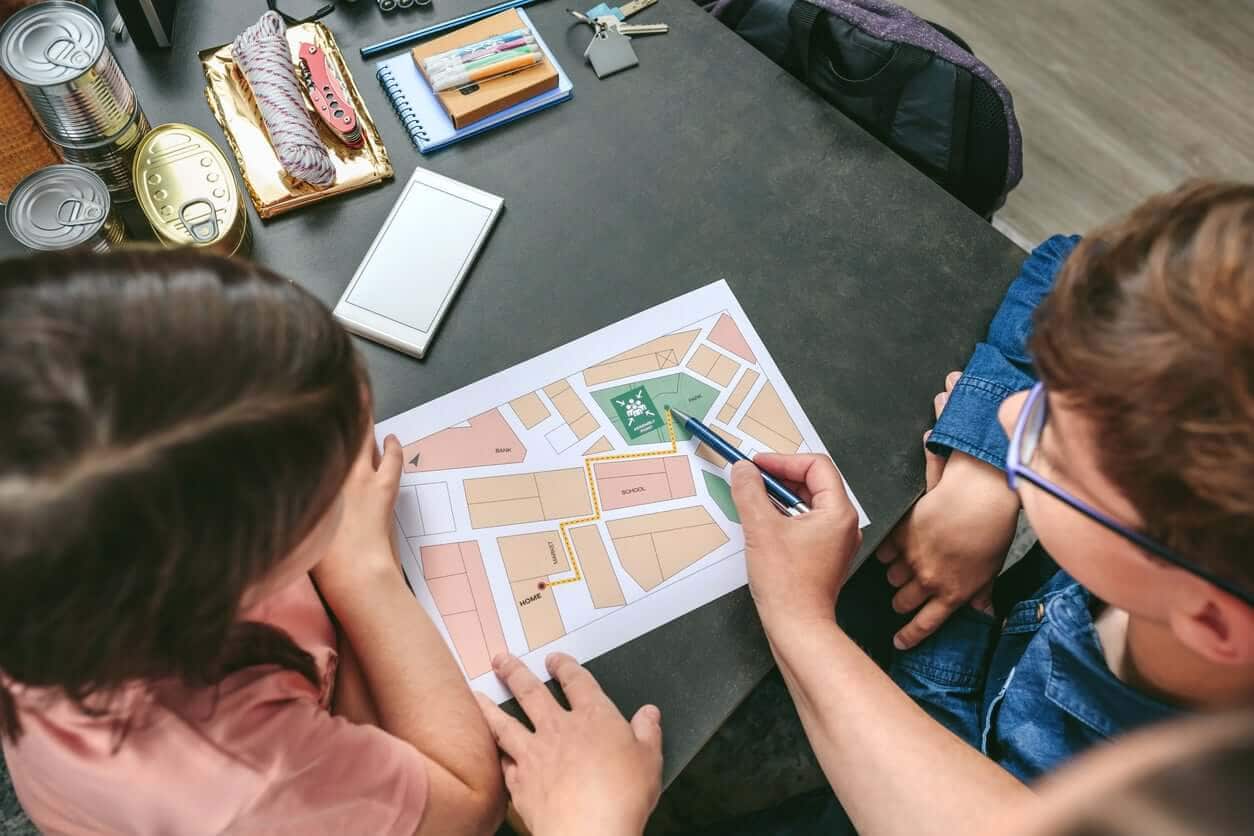
A family meeting point is a pre-arranged location where household members gather if they're separated during an emergency. Since you can't always predict what kind of emergency you'll face, it helps to identify two:
A spot near home — like a neighbor's porch or a specific tree on the block — for situations where your house itself isn't safe to stay in or return to right away.
A spot outside the neighborhood — for situations where the whole area is affected and you can't get back home at all.
Once you've chosen both, practice actually getting to each one, rather than just writing the address down. Knowing the route matters just as much as knowing the destination.
Every family emergency plan should also include a home fire escape plan — mapping two ways out of every room in case one path is blocked by smoke or flames. The outside meeting spot for your fire escape plan can double as your near-home meeting point, so there's no need to choose two separate locations for the two situations.
Preparing for Every Member of the Household
A good family emergency plan accounts for every person in the household, not just a general average of needs.
Infants and small children need their own dedicated supplies: formula, baby food, diapers, wipes, bottles, a change of clothing, a blanket, a small comfort toy, any children's medications approved by your pediatrician, and copies of immunization records. Since young children grow and change quickly, rotate these supplies roughly every 6 months to keep sizes and needs current.
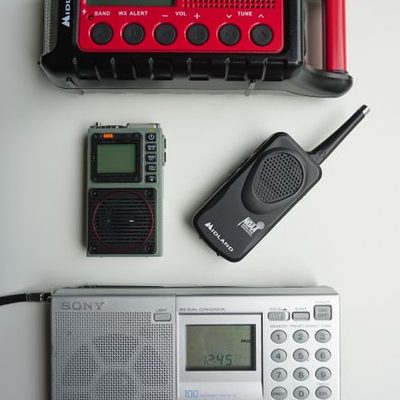
Elderly family members often have needs that go beyond a standard kit. Stock at least 7 days of their prescription medications, along with any mobility aids they rely on, such as a cane, walker, or a charger for a power wheelchair. A medical ID bracelet, a written list of medical conditions and medications, and insurance information should be easy to grab quickly. Make sure they also have a reliable way to communicate, whether that's a charged phone or a NOAA weather radio, especially if they live alone or some distance from the rest of the family.
Pets need a plan of their own too. A pet emergency kit should include 3 to 7 days of food and water, any medications, vaccination records, a recent photo (useful if you're separated), microchip information, a collapsible bowl, a leash and collar, a carrier, waste bags, and a comfort item. It's also worth identifying pet-friendly evacuation destinations ahead of time, since not every shelter or hotel accepts animals, and figuring that out in the middle of an evacuation adds unnecessary stress.
What Belongs in the Family Emergency Kit Itself
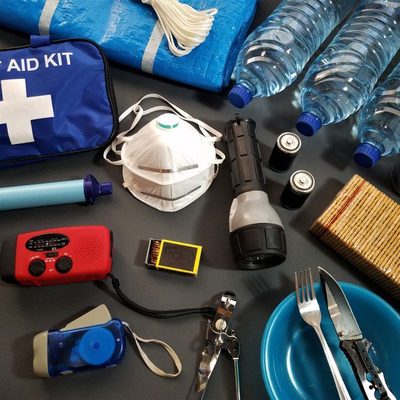
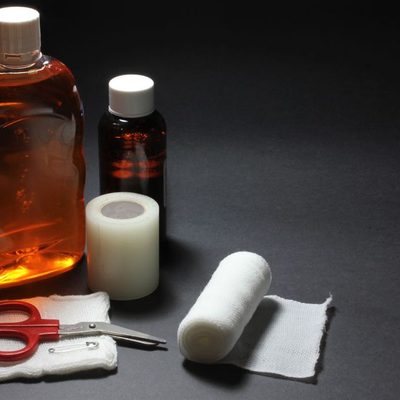
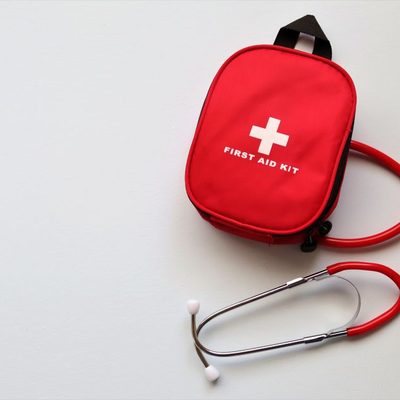
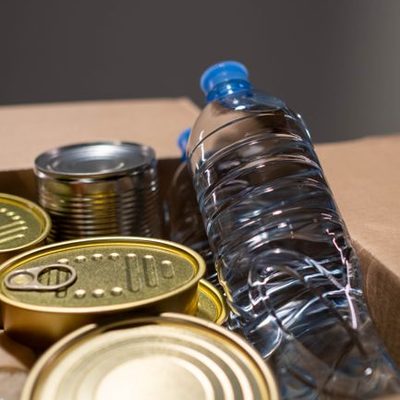
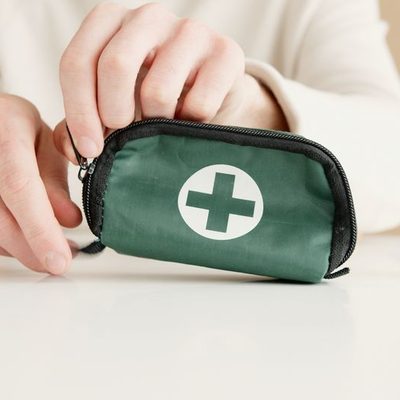
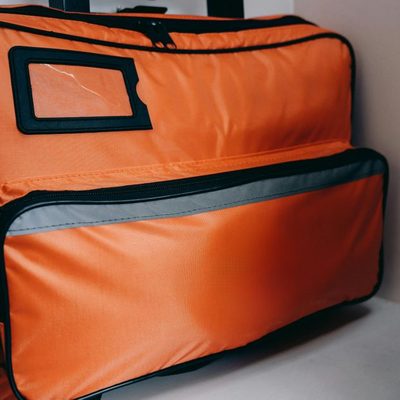
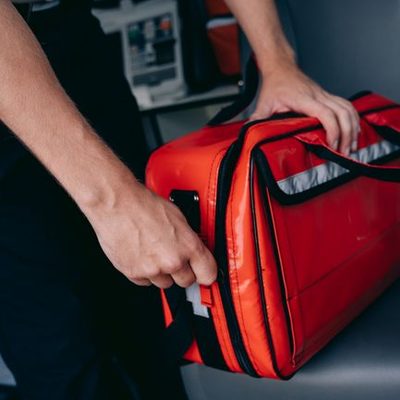
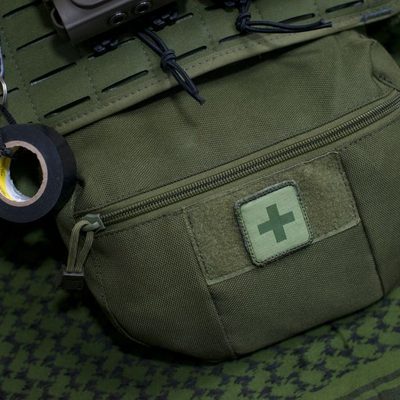
Alongside your written plan, your household should have a stocked home emergency kit ready to go. At minimum, that means water (1 gallon per person per day, for a minimum of 3 days, with 14 days recommended for higher-risk areas), non-perishable food, a first aid kit, a NOAA weather radio, flashlights, blankets, any regular medications, basic sanitation supplies, and the pet supplies mentioned above. Don't forget any special items needed for infants, elderly household members, or anyone with specific medical needs, since those supplies are often the hardest to find last-minute if a disaster strikes without warning.
You have two practical ways to put this kit together. Building one from scratch gives you full control over exactly what goes in it, but it also means sourcing each item individually, comparing shelf lives, and making sure nothing important gets overlooked. A pre-assembled emergency kit takes care of that groundwork for you, bundling the core essentials — water, food, first aid supplies, lighting, and more — into one ready-to-go package, which typically saves both time and money compared to buying everything separately. For many households, a pre-made kit is a practical starting point that covers the fundamentals reliably from day one.
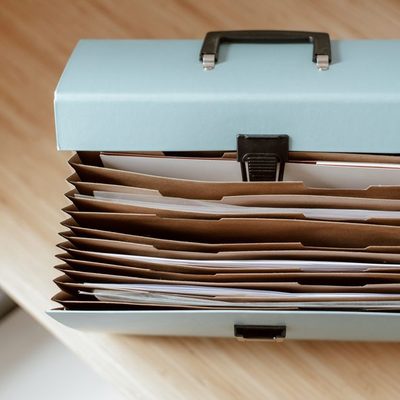
Whichever route you choose, treat the kit as a foundation rather than a finished product. Once you have the basics covered, personalize it with the items unique to your household: prescription medications, copies of important documents like IDs and insurance policies, a change of clothing for each family member, and anything specific to household members. That personalization is what turns a generic supply of essentials into a kit that's actually built for your family.
Practice Makes the Plan Useful
A plan that's written down but never rehearsed tends to fall apart the moment it's actually needed. Run tabletop drills at least twice a year, walking through different hazard scenarios: what happens, where everyone meets, and who's responsible for contacting whom. Time a practice evacuation so you have a realistic sense of how long it actually takes to get everyone and your kit out the door. Use these drills as an opportunity to rotate your kit supplies too, so nothing expires unnoticed between real emergencies.
Include children in these drills with age-appropriate participation — even young kids can benefit from walking through the motions a couple of times a year, so the plan feels familiar rather than foreign if it's ever needed for real.
Adapting Your Family Emergency Plan by Disaster
Every natural disaster comes with its own preparation needs, so it's worth adjusting the basics of your family emergency plan slightly depending on what you're actually preparing for.
Tornado: The single biggest adjustment is designating a specific safe room — a windowless, ground-floor or basement space — since tornadoes leave little warning time and everyone needs to know exactly where to go without discussion. To find more information on how to get ready for a tornado, read "Tornado Watch vs. Tornado Warning: What's the Difference (And Why It Matters)."
Hurricane: Because hurricanes come with advance warning, your plan should include a clear evacuate-or-shelter decision point tied to official guidance, so the whole family knows which version of the plan is in play well before the storm arrives. For more information on preparing for a hurricane, read "Hurricane Preparedness Checklist."
Earthquake: Since earthquakes strike without warning, the priority is making sure everyone in the household knows to drop, cover, and hold on immediately, rather than trying to run for a meeting point during the shaking itself. Our article “Earthquake Preparedness: What Causes Them and How to Get Ready” will fill you in on more need-to-know details.
Wildfire: The key adjustment is treating your evacuation routes and go-bag as time-sensitive, since wildfires can force a departure with very little notice. Practice getting out fast, not just knowing where to go. Read "Wildfire Evacuation Plan: How to Prepare, Evacuate, and Stay Safe" for more information.
Power outage: Your plan should account for losing communication and refrigeration at the same time, so it's worth agreeing in advance on a backup way to reach each other and a plan for perishable food and medications. To find out more, read "Power Outage 101: A Practical Guide for Staying Safe."
Nuclear: The most important shift is planning to shelter in place rather than evacuate, since getting indoors immediately and staying there for at least 24 hours is safer than being caught outside trying to reach a meeting point. For more information, read "How to Prepare for a Nuclear Emergency."
A Plan Is Only as Good as Its Follow-Through
Building an emergency plan for a family takes an afternoon. Keeping it useful takes a little maintenance: an annual review, updated contact information, rotated supplies, and the occasional practice run. That small, ongoing effort is what turns a plan sitting in a drawer into something your household can actually rely on when it matters most.
Don’t know where to start? Download our free family emergency plan template.
For more guidance, visit our Preparedness for Families FAQs page for answers to common home preparedness-related questions.